Monday, May 30, 2011

"I'm on a tightwire, one side's ice and one side's fire"

Ahhh tomorrow kicks off senior week.
 
this past weekend I've put in a solid amount of time preparing my WISE presentation, relatively at-least. Last night I spent two hours editing 45 min of footage into a rough 20 minutes of quality footage. In the end even that needs to be narrowed to around 7 minutes. I was telling my mom last night, and might as well tell you tonight, how constricting it is to take an hour long interview and compact it into a cute 7 min. message. It's reductionism I tell you! I've learned that my job is to search for gems; those hard hitting one-liners that go something like. " buying local stimulates the local economy and is the quintessential act of democracy" (not a real quote). The problem is the message is so much more dense. I need to walk the line just right, between not oversimplifying or overwhelming. "Make everything as simple as possible, but not simpler." said wise Mr. Einstein

So i need to do probably 10 hours, at-least, of video editing. 
I've got the intro worked out, but am still working out how the middle will be organized. Drizzy G I know you want a story board. I have thought of the major elements of my film and points I want to address, and how I will weave those points in with interviews, but I don't have a concrete movie making formula to follow yet. I do know that my intended audience is those who know little and want to learn, and those who know a lot and just need to be inspired/ reinvigorated.

As for my presentation I have decided to do it all on the fly. Better for the nerves that way.

Just playing, I took about 5 pages of notes of points I wanted to hit in my presentation (and movie). I am going to start by talking about what I set out to do, and why I set out to do it. Then I plan on diving straight into the subject of food, using that as a microcosm for the entire resilience movement. Food will lead into the importance of localism, which will lead into energy use, which will lead into transportation, and so on and so forth....

Well goodnight. 

Sunday, May 29, 2011

If I knew what I know now...

As usual I've been busy, but have neglected to tell you any of my thoughts, accomplishments,etc. 

To resalivate (hey that's not a word!) your palate of Ecoboy-shenanigan-knowledge let's begin with a short piece of writing I was required to do in WISE last monday. 

The question--- What did you not know in September that you know now?

The answer---
 I like reading more than writing. Moreover if it was up to me I wouldn't write anything; I would direct people to things already written, works much better than a sloppy teenager could manifest.

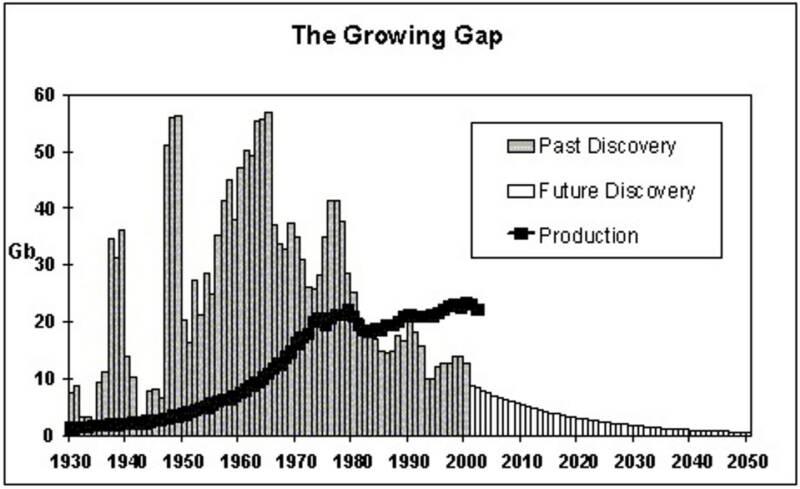
I know bundles of new facts,stats, and figures, such as--- The EROEI (Energy Returned On Energy Invested, i'll talk about it more in my next post) of oil in 1930 was 100:1 and now it is as low as 11:1 in the U.S. (20:1 globally). Let's see what else... according to one book I read-- 98 tons of ancient algae matter is compacted into 1 gallon of oil. Last one-- it is legal to put ground-up euthanized cats and dogs into cow feed. The FDA says you can feed a herbivore man's best friend, but they don't have the power to recall food, what a trip.

It has come to my attention that senioritis is a farce; contrary to popular belief it is the placebo of laziness.  Unfortunately my case is so far progressed the doctors say i'm surely a goner. 
Sometimes you've got to just do it! it being work.

I've found a word that's much more fitting than "sustainable", it's  "resilience!" 

I know that eating local in winter as a student is nearly impossible. 
I've learned that holding a camera while walking produces a video clip that makes the audience dizzy.
Time flies, but only if I let it.

I know that you create your outcome by the way you perceive yourself.


Monday, May 16, 2011

Dacha-- a Russian retreat home (in Freeville...)

I used to think gardening was only for aunts, or dads trying to convince their sons that "hard work builds character." I am not sure what it is, maybe it's just because I am happy for the the sunshine, but these last two weekends I've spent more time in the garden having a great time than ever before. Gardening was not so long ago synonymous with torture. Is it possible I appreciate playing in the dirt more now because I've finally grasped its importance? Maybe I'll soon tire of le jardin, who knows. I'm not going to lie, picking weeds isn't my favorite. I am more a fan of planting, especially peas; they are just fun to poke into the soil. Patting a thin layer of compost over seeds makes the same deep thump sound as patting a baby's back, it's awfully satisfying. Also, try lying on your belly and putting your eyes right up to the soil-- there is so much happening. Alright, enough romanticizing. But seriously its nice to feel summer on the air.

Saturday night I went swimming for the first time this year. Sunday I headed with Sally my pup, also known as the "noble steed", my Papa, and Sis to a commune in Freeville. The Dacha Project was the undertaking of six kids, most fresh out of college, looking to avoid a mortgage and the volatility of industrial living. Lea, one of those six, gave us a tour of the place. She would tell you they're are each there for different reasons; personally she wants to lead writing workshops, and have the community use the land. Lea is a effervescent free spirit, "This place is just magic, things just work and we don't know how..." was her response to my dad's praise of the lush grass. She showed us everything, from the inside of their main building, which is passive solar with an entire wall of south facing windows ("why would you turn away from that which gives you life and heat! who wants to face the road!?"-Lea) and two walls buried underground. The land in Freeville was purchased only a year or so ago, so buildings are still being put up (Leas future bedroom housed nothing more than a drum set and cinderblocks).
The Dacha is completely off the grid by the grace of a sole solar panel, four decrepit, forlorn batteries, and a diesel generator in the process of being converted to run on veggie oil.

As I am told how the six of them dug the foundation by hand, how the cute straw-bale house (that Lea is living in for the time being) was built with almost no previous experience, how the ponds will end up gravity irrigating the garden, and how they will soon try out gathering their own seeds to plant for next year, I just keep thinking how resourceful these six are. My dad said this is nothing new--he knew lots of similar places in Vermont-- but for me it's just even more of an anomaly.  You graduate from Rutgers, you say "hey I've got enough to pay with student loans, why would I want to pay more, why would I want to leave nature in a frantic rush to pay bills? Why not start a commune?"
And when you think commune don't think a bunch of hippies in the woods eating wild berries and singing Kumbaya. They built their own veggie generator, which heats water, creates air pressure for the water pumps, and generates electricity .check it out =>http://www.youtube.com/watch?v=AMAmNiVuvOU&feature=player_embedded

It doesn't seem altogether to crazy of an idea in a world of rising energy costs, environmental degradation, and myopic, fast-paced living. It's just sensible.  Check out their blog, it's much better than mine-- subtly humorous, yet informative. http://dachaproject.com/blog/

(sigh)
what else is new? I worked with Drizzy G on a calendar of things I need to do before my presentation, which by the way is on June 14 (tentatively). I started thinking about my film. I'm listening to my Dave Von Ronk radio station on pandora, "Flowers Never Bend With the Rain" by Paul Simmon might work nicely with the Dacha Project video...

It's summer! check out this poem i heard this morning.

Summer Music

Summer is all a green air—
From the brilliant lawn, sopranos
Through murmuring hedges
Accompanied by some poplars;
In fields of wheat, surprises;
Through faraway pastures, flows
To the horizon's blues
In slow decrescendos.

Summer is all a green sound—
Rippling in the foreground
To that soft applause,
The foam of Queen Anne's lace.
Green, green in the ear
Is all we care to hear—
Until a field suddenly flashes
The singing with so sharp
A yellow that it crashes
Loud cymbals in the ear,
Minor has turned to major
As summer, lulling and so mild,
Goes golden-buttercup-wild.

Tuesday, May 10, 2011

Say cheese

I'm drenched. The hot whey steam scorches my nostrils, I  hardly finish wiping my forehead before a slick layer of sweat resurfaces....

I arrived at Snow Farm hoping to take a quick tour of the dairy operations, and then talk over a nice cool glass of milk. Well, I was wrong. Before I could say Gouda I had been swept into a room resembling the high school showers, and was soon wrestling 50 pounds of steamy raw cheese into a bucket as my bare feet soaked in the pungent trickle of warm whey water.

 "Making cheese ain't as easy as playing baseball, is it?"

Aarron Snow chuckles across the vat from me. He has a long  neck, a sinewy build, and the smile of a seven year old on Christmas. His eyes are just like his dad's-- alive and giddy. His pops joins in on the laughter as he puts the finishing touches on my blubbery mold of cheese. His checks and forehead are shinning too--15 minutes of pouring hot cheese juice on mounds of giant silly putty is no cake walk.


So what was I doing on a perfectly nice Saturday afternoon indoors making cheese?


Cal and Aaron Snow may just be the coolest father-son cheese making duo this planet has ever produced. Mr. Snow has been a dairy farmer in Brooktondale all his life. By far the youngest of all his brothers he took over the farm in 1974 after graduating from Cornell. The Snow family has been farming in this area for a  long long time-- precisely 50 years before the civil war began.
But it's been a while since any Snows were making cheese, probably over 80 years ago.
So when Aaron returned from the Peace Crops. in Tanzania he and his dad thought it was a pretty swell time to put an idea 10 years in the making into action. Two years, a handfull of  runny provolone batches and  a few dozen workshops later Snofarm once again became creamery; the only in Tompkins County as a matter of fact.

Now I have known Mr. Snow for a couple years now, and I had heard about the cheese operation. When the Brooktondale Market had a day of Snofarm cheese tasting , a month or so ago, I decided to swing by. Well as Mr. Snow attested during my visit, the response was phenomenal. Arron and his pops joked before the event that they would be lucky to sell five pounds. By the time I had gotten there they had sold over 70. It was easy to see why, the cheese I tried was almost as good as its punny name-- fetish. That's when I decided to get an insiders look.


Although I visited,and made cheese over two weeks ago I am still so gosh darn excited by all that I filmed. I can't wait to show you.


Farmers really have got the good life figured out.

Monday, May 2, 2011

Soul food

Well this past weekend I decided it was time to give this whole local eating thing a bang. After an hour of circling the Greenstar produce section I felt slightly disappointed the only local vegetable was a strange, orangery brown, not terribly pretty looking, potato/dicon thingy. It kind of resembled an oversize wart. So I did another round, at least my 5th. Finally, having discovered the ground beef, I was lucky enough to run into a family friend who had watched me aimlessly wander the store mumbling to myself "alph alpha seeds, 1 pint, 1 pint." In response to her quizzical look, and disbelief, "you're still here!" I conceded and told her of my attempts to eat local for the next week. Well lordy you would never believe how nice people are to help you out in a bind. Those witch nose vegetables turned out to be  sunchokes, "excellent on salads."

So an hour and a half later I had almost covered half of the bottom of my shopping cart, spent $42.79 (to the amazement of my mother who gasped "5 dollars for that little thing of butter, oh Marcellll"), and was glowing from check to shinning check.

All local (50 mile radius) shopping list---

.ground beef
.whole chicken
.unsalted butter
.plain yogurt
.corn grits
.bread flour
.ramps (another vegetable previously unbeknown to me. they're kind of like scallops. great on salads) 
.mutzu apples
.lettuce 


Arriving home I immediately assigned my sister to the task of baking two loves of bread, which of course she did an excellent job doing. 
My mom popped the loves in the oven in this morning. There's not much better than waking up to the soft, spongy small of bread. 
So today is day numero uno of eating local. I am actually quite proud of myself if i may say so. If it takes me 15 min to buy grits imagine how long it takes me to cook them.

Breakfast=
-local grits
-local milk
-local water 
-2 slices homemade local wheat bread
-local butter
-local mouth

Lunch=
- 2 sandwiches w/ homemade bread, local lettuce
- not local turkey (couldn't find any-- shouldn't have missed the farmers market) or mayo
- local apples
-not local rip-offf cheezit things

Snack
-4 pieces of bread w butter and local honey

Dinner=
- 2 grilled cheese sandwiches  (bread,cheese, butter)
-all local salad (apples, ramps, sunchoke, backyard dandelions, lettuce,"snow farm fetish" cheese, carrots) 
-local milk


I had to resort to grilled cheese because I didn't have any thawed meat. 
The temptation to eat chocolate and buy a milkshake was almost to hard to handle-- when have I ever not eaten something I wanted and that was not within my purchasing power....
So far the spoiled eco boy has encountered these problems--

  • Eating 1 1/2 loves of bread in one day get's old fast. basically after the first day
  • The hours of the piggery (place to get local wilberts) don't match up with times I am free
  • Farmers market isn't until next week
  • need to get more milk. don't have time
  • Away baseball games mean i get home at 9. I eat lunch at 12. waiting 10 hours between eating means this sinewy build is loosing energy. I regret to say I have an away game tomorrow and I plan on eating the cheap white bread sub the team provides. Michael Pollan please do not strike me with a thousand lightning bolts!

Having fun. Oh ya


Thursday, April 28, 2011

Reading Research and Reality

With only a short practice after our game was canceled I arrived home at 5. It has been a while since I've been home before 6:30. I had no idea what to do with myself. After some jubilant time wasted I warmed up a bowl of noodles, poured a glass of milk, grabbed a book on peak oil and headed to the plush green grass--shirt off, tan time.

Reading about oil iss a great time. Who knew that something as boring as thousand year old algae remains could have so much written about it. Acting out of the ordinary I felt inclined to take notes on what I was reading. Many scribbled stats will not go forgotten--
"EROEI of oil in 1930 was 100:1" 
"Europeans use 1/2 the amount of oil per capita of an American."
"resilience vs. sustainability"

the great thing about research is it puts everything back in perspective. It gets you thinking again.

I want to come back and summarize some of the articles I read.
But here they are for now.
Oh ya, and I couldn't help but read a couple of articles on cows/beef-- agriculture is so interesting!

  • http://www.news.cornell.edu/releases/aug97/livestock.hrs.html
  • The Transition Handbook
  •  http://peakoildebunked.blogspot.com/  ---this was quite helpful 
  • NY Times "rethinking the meat guzzler"
get the dome piece ready for thoughts on oil!
My main dilemma with reading splurges is passing the info on. Restating  the information seems pointless when I can simply refer you to the article. But of course it helps me think critically when I have to argue an idea on my own. Anyone can read and regurgitate. With such discerning readers as yourself I don't want to disappoint.

Monday, April 25, 2011

Lists-- cause aint nothing wrong with brevity

I'm getting eaten by mosquitoes as we speak. Not trying to dwell at this comp too long. here's what you need to know....

 In the last week I've...

  • Attended a lecture on global warming and what our responsible response to it should be
  • Interviewed local dairy farmer Cal Snow and son Aaron. Such great people! We should get the football team to make cheese, it's a workout
  • Got a couple books out of the library about transportation.
  • Started reading the Transition Handbook, about turning cities into zero carbon emitters. It's possible and almost as easy as eating fritters....
  • Set up a possible informal tour of a Dacha. Still not really sure what it is--kind of like a commune, and they produce their own food make their straw-bale houses. The lady is really cool. check out the blog http://dachaproject.com/blog/ 
  • Contacted Chris about possible problems with movie files. Told me to try on my own first. Haven't tried... think it'll work....
  • Contacted Tim Logue. Have yet to set up a time
  • Planned out a week of eating local.
  • Drove a lot. " I heard that. Wish I hadn't heard that. But I heard that"

As you can see I do a lot of nothing. But at least I'm working towards something.

I am pretty busy now as 8 games have been canceled and rescheduled for the following weeks, (make that 9 it's pouring outside my cozy abode right now),. But still...
In the next two weeks I should do these things:

  • Return Fast Food Nation. Great Book.
  • Go to garden meeting at Mrs. Clark's house at 6:30 on April 26. Make some food for it if I can
  • Go to the Economics of Happiness movie at Cinemapolis on April 27
  • Go to other Fleff Movies
  • talk to Time Logue
  • try out I movie files
  • visit Dacha
  • cross fingers
  • Post on going to the farm
  • post on peak oil
  • post on failure
  • prepare for local eating
  • mom interview me. Just DO IT


I'm working hard these days people. ohhhhh ya

Friday, April 22, 2011

"Environmentalists aren't just white intellects who have solved all their other problems" Environmentalists are everyone

well well wellll. I am back on this blog grind once again.
Lots been happening, lots been stirring in the big cauldron, lots to say.... 


I've got a couple posts I want to write, but to start lets chat about  DOING THE RIGHT THING.  Yes it's big, it's scary, and it's worthy of caps lock.


To start, what makes me do anything?  The way I see it there are just two reasons-- I make myself do it or someone else makes me do it.  More to the point, I believe driving is bad and so I stop driving, or some snobby, intrusive environmentalist government tells me driving is harmful for the air and is a severe contributer to global warming, and therefore impounds my car and hands me a bike.  
I may feel slightly more ticked off at the latter situation; I might feel inclined to join the Tea Party, but  either one will make me  DO THE RIGHT THING. 


So one approach is systematic and imposing, while the other is individualistic and self-willed.  
My question is, which one is right? And how do the two best work together? 


I attended a lecture at Cornell by  Bill McKibben-- a world renowned writer on global warming, and environmental problems.  I will talk more about what he said another time, but I just want to mention a few points he brought up--Global Warming is the most severe problem we have ever faced. In 2010 alone we had the highest temperatures ever on record, there was such massive flooding  due to increased moisture in the air that 1/4 of Pakistan was inundated, Russian cereal grains were wiped out due to unprecedented temperatures, and a part of the arctic that less than 40 years before people thought would never ever be uncovered now was melted and open enough for a boat race. And the terrors go on-- wildfires, mosquitos, drought, acidified oceans, bleached coral reefs...
For 20 years we have pleaded to our congressman and woman. Using the analogy of trying to talk to a unwavering cashier on wanting to return a product--the time is now to go into the back-room and see who is paying the guy. 
The US Chamber of Commerce is the largest lobbying group in the US, and is conveniently located half-a-block away from the White House. The Chamber spent $33 million on the midterm election alone.  16 companies contribute 55% of all funding to the Chamber, which claims to speak for all businesses in the United States. I wonder if it speaks more for certain ones? The Chamber has long had a stance on environmental issues-- they are to be ignored. Recently they put out an enlightening statement on global warming-- populations can acclimatize to warmer climates via a range  of behavioral, physiological, and technological adaptations.”  Physiological adaptions? I just get the sense that telling Pakistanis to grow gills or build submarines wouldn't go over to well. 


But back to this kid who wants to drive less. He lives in a country that contains 5% of the population and yet emits 25% of the pollution,  where the average individual uses the same amount of energy as 128 Bangladeshis, where he is sheltered from the problems of dengue fever in Bangladesh attributed to the burgeoning mosquito population that is due to the global warming that is caused by his country's relentless quest for a (comparatively) posh lifestyle. He bikes everyday, his house is lit only by the holiest of lights-- florescent, He eats grass fed beef because he heard that their being on the move, coupled with their diet mean less methane in the air. But the real problem is he's up against the richest companies in the history of money. And he is in a system that forces him to consume what he doesn't need. 


So the question is does an individual approach ever work?  
Should what he really be doing is taking his left foot and shoving it up the asdlfkj of a system that is an abomination to the rights of all life on earth. Should he concentrate all his efforts on fighting the big guys because they are the ones controlling the system? Ya, and he should probably get some more people to help him. the system can change the people, but the people can change the system.


Did you know the largest march, at the time (2006), on global warming was organized by seven writers in Vermont. It consisted of 1000 people, the largest march did. As Bill McKibben put it, "you have everything for a movement, absolute scientific backing, technological and engineering solutions, you have everything but the actually movement. You need the people!"

Tuesday, April 12, 2011

Revisiting food.

If you haven't met Robbie Briotta you've missed out. He's a great guy. Here was his comment on that verbose post on food a while ago---"Just some things to think about with this. (Just to play devils advocate personally I agree with you) What would happen if production dropped? We feed millions of people around the world not just Americans with our corn and cattle production. Because its so cheap Americans are able to spend more money on other things which not only boosts the economy but helps people pay for college for their kids, buy homes, etc. compared to the rest of the world who pays if I remember correctly around 17% of their income on food. Also if we stopped producing as much we wouldn't (as a country not the farmers) take in as much money from other countries buying food from us. Not only leaving people in war torn regions possibly starving, but in these tough economic times it'd be really tough and to cut any revenue. I mean our trade balance is already one sided enough as it is. Just some things to think about here of what the opposition would say even though I agree with you haha. "


Response


Man you always keep me awake, gotta love the devils advocate. I completely agree, and wish I had written about it more in the first place--high production creates low food prices, which means more money can be shifted to the other basic needs of an individual in a developed nation. However what we are talking about is simply tossing out government subsidization of the food that is the worst for us. As you know, we walk the line with finding a fair price--consumers want the lowest price and farmers want the highest. What the New Deal did by creating a price floor proved to find that happy medium. Food, in my mind, is not a normal economic good; lowering the price of a toy may mean it is lesser quality and can thus break easier, resulting in a sad kid, but sacrificing the quality food can result in a sick kid. Bad food kills slowly and as you know we pay for it with healthcare costs. Yes food should be within the economic range of everyone, and I think it easily can be if we shift our production from commodity corn, ethanol, processed food, to nutritious people food. It's not a shortage problem its an investment problem. The only reason we use corn for biofuel is because the corn industry has pushed for it and the gov has subsidized it--switchgrass is just as viable of an option. 30% of corn goes to corn syrup, how many people do you know have died of lack of soda? Prices don't have to go up an cent if we just invest in what really matters--nutritious food for all.  The beauty of it all is the production of food ,unlike computers or cars, isn't exclusive; with the desire almost anyone can farm. We did it in WWII with victory gardens, we can do it again. But again the solution isn't just saying hey all poor people go farm. On the end of hurting other countries by lowering production it is the same answer and then some. Again you don't need to produce less at all, you just need to produce less of what is superfluous to basic human survival. I believe we have a distribution problem  http://opinionator.blogs.nytimes.com/2011/03/08/sustainable-farming/
(I recommend reading the comments that disagree). I forget exactly which country I am thinking of- possibly Egypt or some other country in the region-- but they went from exporting much of their grain to importing something like 50% of it. Countries that are food dependent instead of independent are much more food insecure (of course their are exceptions, say Alaska), but for the most part relying on imports has hurt underdeveloped countries. Take for instance Mexico; when cheap corn flooded the market many farmers lost their land and livelihoods,driving out local sustainable food sources. As I understand it Mexico became more reliant on monopoly controlled imported grain and  now has high grain prices due to speculation for ethanol (another problem in itself) drives up the cost of this food staple.

here's a good article about how private investment is hurting developing nations  http://www.nytimes.com/2010/12/22/world/africa/22mali.html?_r=1&scp=6&sq=kicked%20off%20land%20farmers&st=cse

 If we really cared about the plight of those nations, not just our revenue, we would supply them with the tools to grow their own food. Unfortunately helping others isn't exactly a measure of GDP.

And as for the one sidedness of imports verse exports and how that effects us, ehh I've only taken a semester of highschool econ.

Again I maybe wrong on the economics of all of this...

again thank you Robbie

Monday, April 11, 2011

Can't buy me love

Just read a nice thoughtful NY Times article. http://www.nytimes.com/2010/12/02/opinion/global/02iht-GA04Sachs.html?pagewanted=2&_r=1&ref=sustainabledevelopment 

The concluding paragraph about sums it up--
"We enter 2011 confused, demoralized and feeling impoverished; yet we are living at the time of the greatest productivity and prosperity in human history. No problem today — poverty, clean energy or national security — is beyond our technical and intellectual means. Our problems lie elsewhere, in our confusion over the sources of ultimate happiness. If we can behold the power of our tools, and the yearnings for life’s deeper pleasures, then 2011 can be the start of a new era of wellbeing. The choice is ours and ours alone."

When we see someone with an physiological disorder-- an anorexic who refuses to think she is anything but fat-- we see an obvious problem. Yet isn't it just as twisted that most of us in the developed world work our tails off for more mullah while 3 billion people, half the world, lives on two dollars a day. Is our perception just as distorted? We can spend just as much in one weekend shopping spree as most spend in one year, and still feel unsatisfied! Is there possibly a void that cannot be filled with money alone?
It's obvious that money can buy convenience, services, and free time, but when is enough enough?
Is just enough never enough when you can have more? 


Does it make sense that 20,000 people die each day because they can't afford food, medical attention, or clean water,and at the same one man can control 50 billion dollars? It's a pretty trite conundrum, but the wealth paradox is worthy of insistent questioning.

And a lot of rich do contribute enormous sums, but I don't think we should fool ourselves into believing the solution relies in philanthropy of the filthy rich.
Another great article I read was a 15 page LA TIMES piece on the conflicting nature of Bill Gates philanthropic work with his investments. It's a detailed article worth reading. Essentially many companies that Bill Gates invests in to make money (some to go to his charitable foundation), are in the face of his foundations goals, mostly involving health and the environment. One example pointed out that Bill Gates owns $100 of millions in the oil companies that were polluting a region so bad that half the kids had life threatening asthma. While Gates may not directly support such pollution, he is voting with his dollars and his vote is contradictory to his philanthropic work.

to quote some other main points

"In 2002, a study found that more than half of the children at a school in nearby Merebank suffered asthma -- one of the highest rates in scientific literature. A second study, published last year, found serious respiratory problems throughout the region: More than half of children aged 2 to 5 had asthma, largely attributed to sulfur dioxide and other industrial pollutants. Much of it was produced by companies in which the Gates Foundation was invested.""At the Gates Foundation, blind-eye investing has been enforced by a firewall it has erected between its grant-making side and its investing side. The goals of the former are not allowed to interfere with the investments of the latter."
"Using the most recent data available, a Times tally showed that hundreds of Gates Foundation investments -- totaling at least $8.7 billion, or 41% of its assets, not including U.S. and foreign government securities -- have been in companies that countered the foundation's charitable goals or socially concerned philosophy."


Here is my philosophy on wealth (without  eloquence because it is late)

Basic needs of everyone should be met before others can righteously have more than they need. Most money can be accumulated by investments, and thus the most profitable people invest in places, things, or people they have no connection to. Without connection to an area it becomes exploited. Take for instance International companies who went into Chile and built cellulose mills and dams. Waters were polluted, people were displaced, livelihoods were lost; locals saw things they held dearly, destroyed. But what can't be "fixed" with money and lobbyists? And like the WWI bomber pilots who could kill 1000 people with the push of a button and without the single glimpse of death, it is easy to ignore the affects of something so far away.
As Albert Einstein said "Peace cannot be kept by force; it can only be achieved by understanding." How do you understand a place when you're only their to make money?


.

We would like to think that because land is private it only affects the owner, but in reality everything is common ground because ecological destruction, especially water and air pollution, doesn't have boundaries. There are more than enough resources to go around. The tragedy of the commons can just as easily be the triumph of sustainability. I think we just need to keep asking ourselves-- what am I working for? And what truly makes me happy (making buckets of money, helping others, spending time with family)? 

I believe it all starts with a shift in thinking. Our actions are a result of educated thought.

As David Orr, a professor at Oberlin College, says “Much of what has gone wrong with the world is the result of education that alienates us from life in the name of human domination, overemphasizes competition . . . and unleashes on the world minds ignorant of their own ignorance”

Who thought that spending $750 billion a year on the military, but only $15 billion to helping the world’s poorest countries cope with disease, hunger and famine, was a good idea. As Greg Mortenson says "books not bombs" It's time we spent money on constructing, not destructing.

Outada Rut with Planning

List planning is fun! 
here is seven things I want to accomplish in the next week

  • A blog post a day (keeps Drizzy G away)
  • Set up interviews for the next 3 weeks
  • Interview Mr. Snow on Sunday
  • Contact Tim Logue 
  • Contact Jennifer about Garden
  • Read 3 articles 
  • Comment on other blog
Yay!

Sunday, April 10, 2011

relativity

It blows my mind that I've gone 6 days with not a single post. I think my mom has finally gotten around to reading my blog so now I get things like " Marcel the need to get goinggggg".
"maaaam, I knowwww. I've got Angelina baking me bread right nowww"

We're past the halfway mark. Time flies like an arrow fruit flies like a banana.

Well the farmers market opened, and let me tell you there are not many nicer places to be than the farmers' market on a balmy summer morn. I bought some carrots, and took the initiative to ask my mom if we needed any thing (local). I still haven't decided on whether or not it makes sense to buy a farm share when we are so close to places like Greenstar and the market. The less driving the better, although  I do want to meet more local farmers. Either way you better believe bountiful harvests of lush home-grown food is soon meeting my belly. Just to comment on not eating much local food in the winter, or eating locally in general-- there is no one size fits all for eating locally, and before I preach I have to admit I have yet to try on any size. Don't worry I will.
Eating local, seasonal, home cooked meals  may seem like more of a hassle than it is. There are some sacrifices-- maybe not buying those strawberries that have 10 calories each but required something like 70 calories to ship-- but it makes for becoming more in touch with your food system.
On the topic of food, I am signed up with my mom to do crop mobbing-- working on a farm for a day once a month in exchange for a hearty meal and companionship.
moving on...

I revisited a book, that I hadn't previously payed much attention to. Living the Good Life is funny, insightful, and all around an ideal read for me at this point in time. Linda Cockburn chronicles her family's 6th month, live without spending and eat 100% home grown food from suburban backyard turned garden journey. Her style of writing is enjoyable-- vibrant and witty. And her husbands occasional rants about why he eats meat crack me up. Their kid's a cute bugger.(they spent 5 years just preparing to do this FYI)
 Just a couple things I learned from reading today---

(Australian book so everything is in metric)

  • A litre (3.7 litres in a gallon) of gas contains around 33,000 kilojoules of energy. To put in perspective it takes .5 kilojoules to bench 150lbs (first time I've used physics outside of class). So the energy in one slice of bread will fuel a car for a journey of 380 meters. On that same energy a person could walk 3 kilometers or bicycle 14 kilometers. In comparison the bike is 97 per cent more fuel efficient than a car. Every litre of gas burned creates 2.4 kilos of greenhouse gas. Each litre of gas took millions of years and 26 tons, tons!, of plant matter to be produced. Taking into account all C02 emissions in early 2000, each year we use 400 times all the plant matter that now grows in the world.Everyone knows this but to grasp the scope of such a oil feast lets compact the presumed lifespan of the earth, 4.5 billion years, into one year. First signs of life would not appear until march 29. the first fish would not appear until December 7th. Dinosaurs would be born on December 15 and die on December 26. Humans would arrive on December 31st at 6:17 pm. The oldest person alive today would be born within the last second. Also during that last second we used 2/3 of the Earth's resources, including the majority of it's oil. We would love to think we are giants, supreme rulers of the world, that we can take as much as we please because we are the world. Greed disregards that we are just a blip in time 
  • My computer took around as much energy to produce as that of a car
  •  For every incandescent lightbulb I replace with a flourescent I make $100 over the life of the bulb.We call it saving, but it's an investment, with guaranteed returns, that's a profit to me.

Monday, April 4, 2011

WISE Bureaucracy bullocks

For WISE we were suppose to respond to a short essay about happiness. In the span of two weeks between the time I received the paper and the time (now) I actually thought to answer the given questions, the essay was long gone. Luckily I stole the questions off another student's blog, and have at least a faint memory of the essay's  main points. To summarize, the writer argued that happiness is achieved when one is in the flow, that is they are at a level just hard enough to test strengths and just low enough to avoid anxiety. All of which was presented in a quaint little graph.

I am told to answer the following questions

When do you feel most happy?

I am in jovial spirits when I have accomplished something meaningful. I am content when I rightfully have nothing to do. I am effervescent when in a sprightly situation. I feel cheerful when I know I have helped someone.
And when all four said situations arise simultaneously, I am elated.

React to the article


I am neither a fan of graphs, nor a admirer of papers that work to scientifically extract meaning out of things as complex as emotions (throw in some anecdotes to that paper and I'll be ok). With that being said I do believe it is true-- happiness comes from accomplishments. Whether it's accomplishing free time, or the solution to end all wars, accomplishing things feels good. Yet, I don't believe that is the only source of happiness.

Before posting I watched this video, and many more made by the same daughter son duo for literally an hour.


I haven't smiled that wide in the last week. I wasn't accomplishing anything, I was in the presence of happiness and so I was happy. I think one of the many other layers is simply being around others that are happy. Connectivity matters.

Where are you on the flow chart?
For my project? Mostly in the flow. Sometimes I'm stressed just because I haven't accomplished enough.

How has this changed throughout your project?
Starting out I was ecstatic simply because I got to sleep in an hour early, and got to learn about things I actually cared about. I think the more I push  myself the more my flow will move up (If we had the chart you would know what the devil I am talking about). I must concure that accomplishing things which are the hardest, and that you truly care about,  creates the most sustained form of happiness. Winning the Babe Ruth NY state championship 2 years back still makes me feel good.

How can you achieve flow?

Through hard work, dedication to a meaningful cause. and  most importantly chilaxing the whole time.
ohmmmmmmmmmmm

Sunday, April 3, 2011

unfinished but finishable post on what bugs me the most

This post does not directly tie into present research, nevertheless it is important enough to dedicate some blog space to. Here goes....

To start, how about a Quiz!

Dr. Richard Smith, the former editor of the British Medical Journal, said ______ have become “a marketing arm” of the drug industry.

In 2004 Americans spent more on ______ than gas? (hint it's not food)

For every one Congressman there are ____ pharmaceutical lobbyists 

There is one pharmaceutical representative for every_____ physicians

America spends more on this than do all the people of Japan, Germany, France, Italy, Spain, the United Kingdom, Australia, New Zealand, Canada, Mexico, Brazil and Argentina, combined.

Lastly a short answer question-- While watching Sesame Street I see Elmo taking Zithromax for his ear ache, and one out of every four t.v ads that wiz by the screen is for a legal drug, why?

Outside of our policy of continuous environmental depredation, healthcare in my mind is the most unsustainable system in America. The costs to both our health and our wallets cannot continue for much longer. As Abraham Lincoln said "You can fool some of the people all of the time, and all of the people some of the time, but you can not fool all of the people all of the time."

Americans spend more on healthcare than any other nation in the world. Since the medical breakthroughs and miracle drugs of the early 1900s, Americans now take more drugs than ever. As a society so technologically oriented, and medically industrialized we have found comfort in the sanctuary of a seemingly innumerable spectrum of drugs. We have drugs to help us pee, we have drugs to make us happy, we have drugs to make us grow, and we have drugs to have sex. Never before at anytime in history have we put our health in the hands of so many medicines. It is no wonder the drug industry makes half a trillion dollars a year, over $190 billion in the U.S. alone. Americans spend more on on medical care than they do on food, transportation, or anything else, with 65% of Americans take a drug every single day.

This is a tremendous amount of money, and an astonishing number of Americans. To put in perspective how recent and rapid such growth is, in 1980, Americans spent 1/17 of what they now spend on prescription drugs. Lipitor, Pfitzer's megablock-buster drug, alone now grosses more annually than the amount spent on all drugs in 1980.
And although I am concentrating on the drug industry why not throw in one more fact for good measure. The U.S. spends 16 % of it's GDP on healthcare-- over 2 trillion dollars (lets cut funding to NPR, lets complain about the deficit, but god forbid we tinker with the healthcare system...)

Surely such astronomical spending has reaped unprecedented rewards. The only way to health is through spending! (if anyone is tired of the sarcasm just let me know, really.) No, despite our exorbitant spending we quite honestly aren't doing that great. 

  • In 1972 Nixon declared a war on cancer; that year 220,000 people died of cancer. This year over 500,000 died of cancer. Over 40 billion was spent on cancer research and drugs since. 
  • This year over 600 billion is expected to be spent on cardiovascular disease. 46 percent of all deaths are now attributed to this number one cause of death
  • US ranks 34th in the world for life expectancy
  • The number 3 killer (some say it is 5 or 6) in the U.S is adverse side effects to drugs. Drugs properly prescribed and properly taken kill more than 100,000 people annually. fact.
Well I was just about to heat up and bombast pharmaceutical companies, the unacceptable financial ties of the FDA to pharmaceutical companies, the horrors of Vioxx and Neurotin, the use of Madison Avenue marketing firms and ghost writers to corroborate faulty science on the behalf of multibillion dollar drug companies, and the degradation of true medical research from within our universities; however, (yawn) I am tiyadddd. ill tell you later.

Check out this stuff in the meantime

Our Daily Meds by Melody Peterson


http://www.oftwominds.com/journal08/Prescription-Drugs.htm


http://www.latimes.com/news/opinion/la-op-peterson27jan27,0,4463511.story


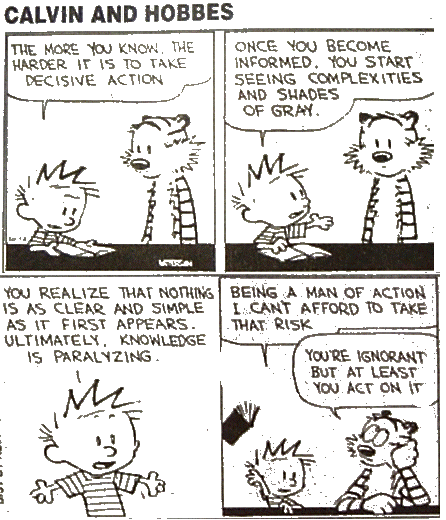
for the record i don't think this is a true Bill Watterson piece, nevertheless it's enlightening 

Now don't get me wrong, I could dedicate more than an entire posts to the benefits of modern medicine, but I want to touch on what most people don't know...


Wednesday, March 30, 2011

Gardening thing

Bonjour! Cava? Oui Cava bien. bon!

sorry you caught me at a bad time, just practicing my french.
well I guess you could stay and we could chat a bit....

Last night I had dinner with a small group of people working on getting kids at Caroline outside and into nature. I know, amazing concept. It was a pleasure to feast on quiche and discus with former Caroline teacher (and host)- Janie Clark,  and current graduate student in landscape architecture,Tim Lynch, as well as  John Weissenger, author of many animal books, about incorporating a school garden into their master plan for a wilderness area. I must say it's exciting to be around so many amazing and supportive people. I took some notes, which I will post up later.  In short, we talked about possible 3 possible areas for the garden, compost options, soil testing, community involvement, construction, handicap access, and curriculum ideas.   There is a surprisingly copious amount of school garden sites, with everything from building raised beds to teaching kindergardeners about worms. I know i most likely wont be around to see this idea completely through, but as Mrs. Clark said, we are building a house and our small group is the architect. The biggest dragon we must slay is creating a master plan  to submit to the state. Unfortunately for us you cant take public school grounds and put what ever you want on it.

A elementary school garden, available to the public, filled with radishes, kale, carrots, and everything in between, might not seem like much, but in my mind it would be fantastic- on par with taking a ski trip. As consumers, food is our number one way we vote with our dollars, and we cast our ballot every day. Getting kids, who (if they were anything like me) bug the brain cells out of their parents, involved in this outmost important local, sustainable, food movement.  Its been shown that kids eating habits are influenced at a very young age, and if it begins young enough a kid raised on kale chips and tomatoes will prefer eating said gross food for the rest of his/her life. You've got to start young!


Saturday, March 26, 2011

1 month plan

Yes, I just got a mac book pro. Its neck-breaking speed, and impeccable design has you chomping at the bit for your own. 55 more hours of scraping paint, filing files, folding papers, and other busy work and I'll have this bad boy paid off, but for now I bask joyfully in its light. You've got to love techiminology.

As usual I have much to say,but this post will be quick and bulleted-- a outline of the next month.

plan for next wave of blogposts

  • Healthcare system parallels to agricultural system
  •  happiness and sustainablity
  • thoughts on films
  •  
Plan for next month

week 1.) 27-31=finishing food
  •   Green building series 7-9 on wednesday
  •   Caroline garden meeting Tuesday 6:30
  •   Snow farm  interview
  • go to commons and interview people
  • and of course finish reading
  • get I movie stuff transferred to new laptop

week 2 & 3.) 1-16=transportation

  • Concentration on transportation 
  • green building lecture 7-9
  • talk to Tim Logue(make sure to get referred to other locals involved in transportation)- city trasnport engineeer and Mrs. G's hubby
  • talk to Tom Knipe- biking guy
  • talk to Jacob Roberts - pod car guy
  • read Sustainable Transportation and other books
  • limit driving (Sweet lord I've been driving way too much)
week 4 & 5.)  17-30=home energy use

  • have home audit 
  • follow energy efficiency path  put out by CCE
  • read The Green House
  • read The Solar House
  • visit house up the road that is passive solar
  • interview Ithaca green building alliance organization
  • contact community building works


I am having difficulties with attending local events when baseball is every day. I really want to attend the youth power summit April 8th, but have a game. Soon games start and then everything is going to get terribly hectic.

Wednesday, March 23, 2011

Lessons of a Tramp

Yes! It's a snow day, I slept 13 hours last night, and just killed 2 hours doing nothing.
 I'm excited to be awake.

In honor of spring, and due to a backlog of unwritten posts, I would like to take this time to reflect upon some pieces of writing that have accumulated in the bottom of my bag. They might seem like a hodgepodge of irrelevant works- a poem about splitting wood, an abridged essay on practicing guitar, and half a chapter on happiness- but each bring thoughts about my project.

So this post is dedicated to a poem

Now I hate to take apart a poem and present each stanza as a separate entity, but to give background and scope to Robert Frost's poem Two Tramps in Mud Time I have extracted the 1st, 6th, 8th, and 9th stanzas.   

Out of the mud two strangers came
And caught me splitting wood in the yard,
And one of them put me off my aim
By hailing cheerily "Hit them hard!"
I knew pretty well why he had dropped behind
And let the other go on a way.
I knew pretty well what he had in mind:
He wanted to take my job for pay. 
.....
The time when most I loved my task
The two must make me love it more
By coming with what they came to ask.
You'd think I never had felt before
The weight of an ax-head poised aloft,
The grip of earth on outspread feet,
The life of muscles rocking soft
And smooth and moist in vernal heat. 
 .....
Nothing on either side was said.
They knew they had but to stay their stay
And all their logic would fill my head:
As that I had no right to play
With what was another man's work for gain.
My right might be love but theirs was need.
And where the two exist in twain
Theirs was the better right--agreed. 

But yield who will to their separation,
My object in living is to unite
My avocation and my vocation
As my two eyes make one in sight.
Only where love and need are one,
And the work is play for mortal stakes,
Is the deed ever really done
For Heaven and the future's sakes.


some thoughts-
In the second stanza he describes his act of splitting wood as
"blows that a life of self-control spares
to strike for the common good
that day, giving a loose to my soul,
I spent on that unimportant wood"


He splits wood not because of an immediate need, but presumably for relaxation. And so as the tramps wander past, the stark contrast between the connection of the wood chopper to splitting wood "a loose to my soul, I spent on that unimportant wood", and the tramps to splitting wood, " theirs was need", creates a revelation of sorts-
 
 "You'd think I never had felt before
The weight of an ax-head poised aloft
"

Their is a newfound appreciate for a task he is not bound to for livelihood, but can enjoy at will.

and then in the final stanza the message becomes clear

" my object in living is to unite 
my avocation and my vocation"

Joy should not come from only hobbies, and work shouldn't just be exclusively to support oneself.
Who better understands this than kids; ask them what they want to do when they get older, " I want to be in the NBA, I want to be a safari guide, I want to be a superhero." Work should be fun.
Yet it is even more, for... "only where love and need are one
and the work is play for mortal stakes
Is the deed ever really done
For Heaven and the future's sakes"

 
For mortal stakes, where love and need meet, there is where our work lies. As MLK said "Social action without education is a weak expression of pure energy. Deeds uninformed by educated thought can take false direction" 
For me this is sustainability-- work for mortal and future's stakes.

I've come to a point so close to deciding what direction I will take this next year that I find myself coming back to these ideas over and over again. I think of Scott, the potter that I interviewed a couple weeks ago; to me his work is his education and his pottery is his mode of social action. 
I think about how some Universities have become heavily funded and controlled by certain pharmaceutical and agribusiness sectors.  I think how school has taught me to go through the motions, but hasn't taught me to question what I learn. As Dominic Frongillo told me in our interview, "I grew up knowing the world could be a better place and I couldn't stand not dedicating my time to making it one"


I could earn fabulous grades and innumerable accolades from my teachers, attend Harvard and go on to work for Monsanto developing bt potatoes, or Chesapeake Energy to engineer new machinery for drilling natural gas, or Merk to market a new blockbuster bladder control drug, or even McDonalds as a synthetic food specialist. Now surely I would earn bushels of money; and rightfully so because I would be working hard, but could I look myself in the mirror and call myself intelligent? No. I think half the problem with the direction our country is going is we aren't playing for mortal stakes. As a capitalists society we value economic success a bit more than we should, while ignoring the implications of affluence without social action.

We can just as easily value working for each other more than we value beating each other. 

a life of self-control spares
to strike for the common good


I am considering becoming a farmer.


Monday, March 21, 2011

Knick Knacks

As much as I would love to have every post pertain to research it is time to reflect upon some of the more drier aspects my wise project. It's cool we can get through this, together.

My last mentor meeting passed as I guilt tripped myself and Mrs. G  listened, wise and nonjudgmental. For those of you who have seen 8 Mile I was Slimshady who told everything wrong about his life before the other rapper could. Unfortunately I was not rapping and there were no girls cheering for me in the crowd.
Nevertheless, with Drizzy G by my side I did receive some uplifting guidance.

First lets outline the plan for the next 2 weeks-

  • Finish Omnivores Dilemma 
  • Watch Food Matters
  • Actually get the camera from Sean A. (ya I know I'm bad)
  • research/ ponder how to spread what you know to the people who don't know (and frankly need to know)
  • get a haircut
  • Contact and possibly interview local farmer Mr. Snow
  • do 10 posts

Next lets talk about other things Drizzy G and I discussed

How I feel ambivalent about having screenings of the movie. I don't want to tell people how to live, nor do I believe I have enough experience or grasp of such a complex issue. Just asking- should we import organic eggplant from Argentina?, produces an unwanted tangle of gray answers. We agreed I could either become a super genius or just say what I know and be willing to say I don't know.

finally-Back planning- June is coming whether I tell it to or not. I need to take out a calendar and see how to best budget my time.

speaking of time
t t f f__ta ta for now

Sunday, March 20, 2011

3 a day- burgers and fries. blog posts and wise

"There are no shortcuts in life"

I heard it at a friends house last year, as I sipped on some milk at his table.
My buddy's older brother said it;  I remember it distinctly.

He was talking about studying for the SAT's , and yet now a year later,  as I read about cows, corn, and nitrogen fertilizer I can't think of a better aphorism for something completely different- farming.

The way we produce industrial food is a shortcut, an artificial means, to make food cheap. But life, the sustainable cycle of symbiosis, doesn't have shortcuts.

These days it is easier than ever to produce mass amounts of food. One farmer can feed over 120 people, an absolute marvel of technological and agricultural achievement. It used to be every 1 in 4 people was a farmer. In the 1920's a farmer could brag about a 25 bushels per acre yield of corn; these days if you aren't pushing 170 bushels per acre you're loosing respect and possibly your farm.
Not only is the average American unencumbered from growing their own wheat, but they are also able to spend a meager 9% of their disposable income on food (as opposed to 25% in 1930).  It's an incredible feat, which owes thanks to hybrid seeds, chemical fertilizers, pesticides, super-sized tractors, and strategic government planning. But bigger isn't always better, and this tremendous growth has come at a price.

-How I understand it-
Information gathered from Omnivores Dilemma, King Corn, The Future of Food, and Fast Food Nation

Lets concentrate on America's numero uno crop-- corn.
Iowa has some of the richest soil in the US, and yet it imports 80% of its food. 2.438 billion bushels of corn flow annually from the Kingdom of Corn, and almost none of it is edible, at least not right off the stalk. 
No, this is industrial corn, destined for ascorbic acid, ethanol, plastics, and cows. You don't eat it silly.


America produces a hell of a lot of corn. It overflows grain elevators, it fills our cars, and it fills our stomachs till they overflow our T-shirts.
How come?
Most corn in the U.S is grown on 100+ acre farms in the Midwest, and requires at-least two things- pesticides and fertilizers. 


In 1909 Fritz Haber discovered a most fantastic thing- how to fix nitrogen to hydrogen. Previously this process was under the exclusive responsibility of nitrogen fixing bacteria on leguminous plants. But hail the human, for now under intense heat and pressure hydrogen atoms from oil could be bonded to nitrogen atoms. A fundamental compound of life was no longer emitted at the discretion of the ever mundane and predictable soybean. But it wasn't until after WWII, when chemical factories began looking for new uses to their main ingredient in explosives, that chemical fertilizers really changed the game. The nitrogen that destroyed Germany is now the food of modern day hybrid corn.  Before corn could only be grown on the same field twice every five years. Before crops needed to be rotated, so fields could be replenished by legumes and cow manure. Before we had less corn. Now we can satisfy corns unmatched thirst for nitrogen, adding 100+ pounds per acre. But not all of it ends up in the soil; excess nitrogen runs off and ends up in the gulf of Mexico (making huge algae booms which cause dead-zones where fish cannot live), it seeps into our water tables, and resides in our ever beloved acid rain.
Yet, corn can be planted year after year. But again this is an articial means to an end. It is unsustainable- farmers now put in 2 calories of energy into soil for every calorie reaped.  The overfarming that led to the Dust bowl of the 1930s still exists. We are pushing the soil to its maximum output. But in doing so we are raping soil of its nutrients and eroding the topsoil. Iowa used to have 8 feet of topsoil and today it only has 4.  An industrial farm no longer gets its energy from the sun, from cow manure, or from bacteria, it has found a faster alternative--fossil fuel based fertilizer. Soil is an organism of complexity we will never fully grasp. By reducing it to three main componets: nitrogen, phosphorus, and potassium, supplied in fertilizer, we are oversimplifying its needs. Plants grow because they have the base compounds, but the soil in which they live is dead. And dead soil leads to vulnerable plants

Thus to keep these plants in unnaturally close proximity, keep them healthy, and to ward off pests, you need another chemical- a pesticide. One things leads to another.
Again it was WWII that caused the advent of chemical pesticides- nerve gas was modified to kill only bugs, at least that was the intention. Monocultures could be blanketed in pesticide so that having multiple crops, incase one failed, became obsolete. DDT became the symbol of 3 decades of triumphant pest control. What, it causes cancer? we never knew....

And as chemical companies soon became an essential of the American farm durring the dawn of the 1950s their influence spread. Chemical companies like Monsanto began buying up seed companies long ago. Just recently Monsanto purchased the largest vegetable seed company in the world. The seeds Monsanto produces are self terminating. The a most basic function of the agragrian system-- saving seeds for the next planting-- has been undermind. But it is fantastic for business; If you control the seeds and you controll the pesticides that safeguard the plants, you controll the prices and the food.


There were decades of denial that pesticides caused any harm. It wasn't untill recently that Monsanto admited the extremely toxic dioxin-- Agent Orange--spread over most of Vietnam in 1970, was actually harmful. DDT, a carginogen, was claimed entirely safe.
However now as pesticides continue to leave a bad taste in consumers mouths we are told not to worry, GMO foods are here to save the day. Now chemical companies control thousands of genes. it is estimated that Monsanto controls 90% of seed genes. Life can now be patented. 


GMO foods are another issue in and of their selves, which I don't wish to get into.
 However it must be clear that there is a sufficient lack of regulation. George Bush's administration made it so that GMO foods did not need to be regulated any differently than conventional produce. GMO food does not need to be labeled and problems with cross contamination has already emerged.
 Promised increases in yield have been minimal at best, and the risks of tampering with millenniums of evolution and plant diversity are immense. What happens if a self-terminating seed cross pollinates? And why do we need more when we have a severe-problem of overproduction?
 It is the paradox of industrial farming that 1st world countries over-eat while 3rd world countries starve. There is now more overweight than malnourished people in the world. Cheap corn from industrial countries outcompetes 3rd world farmers in places like Mexico where imported corn is 3 pesos cheaper per bushel. We have a food distribution problem, an inequality problem, not a technological problem. Subsistence farmers in third world countries are kicked off their land as bigger farms move in. Instead of being independent producers they become dependent consumers. 


but enough with that

Now because your probably eshausted from staring at your computer screen. lets take 5 and comeback.

Soooo now you don't need cows, and you don't need a heterogeneous mixture of crops; you can plant one monotonous mile of corn upon mile of corn until your eyes turn golden yellow. 
But why? Corn is an extremely compact form of energy.


But more importantly...
 Previous policies, instituded durring the Great Depression, insured that farmers could earn a living, set a natural price for corn. If the market price of corn was to go below that price a farmer could take out a government loan, using his grain as collatoral, to store his crop. This encouraged farmers not to sell when prices were low and further weaken the market. When the prices went back up they could pay back the loan and sell the corn. These loans were relatively low risk for the government;  if the price didn't rise the government would keep the corn, and the farmer kept the loan. The government then stored the corn in a national granary to be used in times of crop failure, providing food security, or sold when prices were high. Again, that was before. Beginning in the 50's such policies slowly dissolved. In the 1970's fear over high grain prices-- due to grain transactions with Russia--led to a complete overhaul of our agriculture policy. Lead by the Reagan administration, the push for maximum output began. As grain prices fell small farms were eaten up by large conglomerates .

From that point forth, growing large monocultures like corn relied on government subsidies.
Now, half  of an Iowa farmer's income comes from the government. And where does that money come from? The US taxpayers who spend $25 billion a year to support farmers! It costs a farmer around $3.20 to produce a bushel of corn, and they sell that corn at $2.20 a bushel. That is a net loss of a $1.00 per bushel. Now how in the world is that a viable business model.
Farmers sell at any price, further weakening the market, because they receive deficiency payments from the government that cover their losses. George Bush just a few years ago signed the largest corn subsidy bill of its time. Farmers are loosing money because of direct government policy.
It should be clear why we have fewer farmers than ever...


Once farmers dump their corn at the local granary, (most of which only take corn or soybeans), they no longer have a connection to it; it's simply one more drop in an ocean of 10 billion bushels.

But where does all this corn go and who benefits?
It goes to ethanol
it goes to sweeten everything
It goes anywhere
Most of it goes to feed cows, because it fattens them faster then grass. Unfortunately because they are ruminants it slowly kills them. Cheap corn is the reason you can have a burger for $1.08. It's also the reason ranching has become a relic of the past, and one feedlot can produce more waste than LA and Chicago combined

Eric Schlosser, in his book Fast Food Nation, described America's food system as an hourglass.
You have a lot of farmers on top (the number is decreasing, but there is still around a million, self proclaimed, farmers), a lot of consumers on the bottom, and a small funnel of companies processing the food between the two. It's why you can buy a 4 dollar box of corn pops with 2.4 cents worth of corn.  It's why only 4% of the money you spend on a loaf of bread goes to the farmer who grew the wheat.  It is the reason processed food is the cheapest food.  Just two companies-- Cargill and Archer Daniels Midland-- purchase 1/3 of all corn. 


{at this point I realize this could easily be a never ending post. I  tried my best to say less. There is still too much to say.  There are so many more problems, I could dwell on the process of producing beef for another 6 paragraphs. But here is the point to what I have said so far.}


We aren't producing our number one crop for food sakes we are producing it for capitalist sakes. 
Cheap food is not cheap; the  true price of a burger or any other processed food is externalized. The farmer pays the price, the immigrant worker who stands 8 hours a day in an ankle deep pool of blood shooting cows in the head with a stun gun pays the price, the soil pays the price, the US tax payer pays the price, our health pays the price. If we were to take into account that to grow a bushel of corn requires aprrox.  1/3 of a gallon of oil, if we take into account the water pollution from the overflowing pools of cow excrement, if we actually factor in both the implicit and explicit costs we see the price is skewed. And it was no accident, Corporations have lobbied hard to make that price. They've fought lawsuits, they've worked to break up unions, they've gone to Mexico to recruit cheap labour. They have overcome an inelastic demand (one person can only eat so much) and have meticulously manipulated the way we use a crop; processed food is all about satisfying the taste buds with as many empty calories as possible.


And so we have taken a cyclic system (the soil feeds the crop, the crop feeds the animals and the people, the animals feed the soil, the animals feed the people), and crafted it into a system of inputs and outputs. But nature doesn't work in a linear fashion. In my opinion it's a recipe for disaster.


As consumers it is our job to realize the implications of our purchases. We must realize that their aren't shortcuts in producing life. Distorting nature has consequences. Making that one hamburger has taken food scientists, antibiotics, and lots of energy. Producing cheap highly processed food has come at the expensive of everyone and everything but the processors and chemical companies. It is food void of nutritional value. 


Realistically if we want real sustainable agriculture without waste, not the nominal enterprise that is industrial USDA certified organic, we need to support small-scale, seasonal, local agriculture.
 and to do so we will need a lot more farmers...


It's a system of connectivity. We must not become disconnected from our food.

 "Artificial manures lead inevitably to artificial nutriton, artificial food, artificial animals, and finally to artificial men and women"-Sir Albert Howard